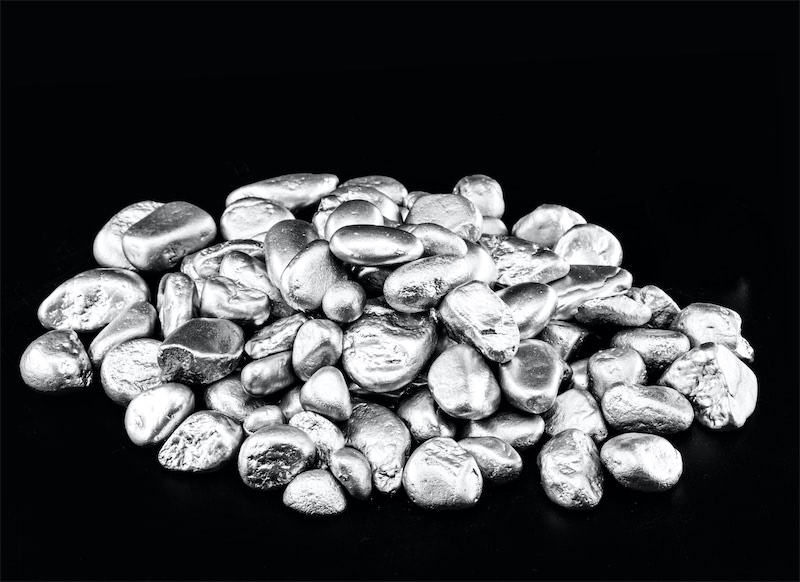
All sulfur in Kazakhstan is a by-product of oil and gas extraction, with supply highly concentrated in two major oil fields. In recent years, the country has started developing downstream sulphuric acid industries to utilize these resources, and it is expected that exports will show a downward trend in the future.
Kazakhstan is the 11th largest oil and gas resource country globally, second among former Soviet states, and the third-largest in the Caspian region (after Russia and Iran). The oil and gas industry is the backbone of Kazakhstan's national economy, with oil and natural gas exports accounting for 60-70% of its foreign exchange earnings and 30% of GDP.
1. Core sources: By-products from two large oil fields
Kazakhstan has 16 supergiant oil and gas fields, including Tengiz, Kashagan, Karachaganak, Uzen, Zhetybai, Zhanazhol, Karamkuduk, Kenkiyak, Karazhanbas, Kumkol, North Buzachi, Armanbekdala, Central-East Prorva, Kenbai, Karalev, and Kuryk. Among these, the Kashagan and Tengiz large oil fields account for half of Kazakhstan's total oil and gas reserves.
·Kashagan Oil Field: Discovered in 2000, it has geological oil reserves of 38 billion barrels and natural gas reserves exceeding 1 trillion m³, listed as one of the largest oil fields discovered globally in the past 30 years. The field is operated by the North Caspian Operating Company (NCOC), with shareholders including KazMunayGas, Eni, ExxonMobil, Shell, Total, and CNPC. Originally scheduled to start production in 2005, due to technical challenges, it was delayed several times until trial production began in 2013, with commercial production starting in September 2016.
As of February 2025, the field has produced over 10 million mt of sulfur since the start of operations. Its associated gas contains extremely high levels of hydrogen sulfide, making it the primary source of current and future sulfur supply growth.
·Tengiz Oil Field: Estimated to have 25 billion barrels of oil reserves, it is the sixth-largest oil field in the world. Tengiz is operated by Tengizchevroil (TCO) under a 40-year cooperation agreement, planning to produce billions of barrels of oil from this site. TCO began developing the Tengiz oil field in April 1993, with its company composition including Chevron (50%), ExxonMobil (25%), KazMunayTeniz (20%) on behalf of the Kazakh government, and Lukoil (5%).
As a traditional main source, its crude oil can contain up to 17% sulfur. In 2021, a new solid sulfur processing plant was built at the oil field, with a monthly capacity of 40,000 mt, and the products are used for export.
2. Industry Chain Extension: The Local Contradiction Between Sulfur Exports and Insufficient Sulfuric Acid Capacity
Kazakhstan's domestic sulfuric acid capacity has long been insufficient, with its primary capacity serving uranium mining. Even over a decade ago, sulfuric acid imports were required to meet demand. For instance, 350,000 mt were imported in 2011, accounting for 16% of its total demand at the time. This shortage issue persisted; by 2024, the sulfuric acid shortage directly led to Kazatomprom's uranium production falling below expectations. This reaffirms that its local sulfur-based acid production capacity cannot meet the needs of its core downstream industries.
Kazakhstan is promoting the local conversion of sulfur. In December 2025, an 800,000 mt/year sulfuric acid unit in Zhanatas successfully commenced operation and produced qualified products. This project aims to fill the gap in large-scale sulfuric acid supply in Central Asia.
3. Export Trends: Expected to Tighten from the 2024 High
Kazakhstan is a major global sulfur exporter, with local sulfur production primarily destined for export. According to mcs and UN Comtrade data, Kazakhstan's sulfur production was approximately 4.3 million mt in 2023, with exports reaching 4.126 million mt. In 2024, its sulfur production was about 5.1 million mt, with exports amounting to 5.035 million mt.
The main export destinations are: Morocco, Israel, Egypt, Tunisia, South Africa, Argentina, China, Brazil, Russia, among others.
Over the past decade, Kazakhstan's average annual exports reached 3.8 million mt. However, influenced by inventory drawdowns, geopolitical factors, and changes in global demand, the China Sulfuric Acid Association predicts a downward trend over the next three years, accompanied by a shift in market flows.
![[SMM Stainless Steel Flash] Asian Stainless Steel Prices Hold Steady for Third Consecutive Week Amid Quiet Market](https://imgqn.smm.cn/usercenter/NHXhQ20251217171733.jpg)